Mission
The Brownfields Program mission is to assess and remediate potentially hazardous sites on Tribal Land, abandoned properties, and new real estate to ensure protection of natural resources.
A brownfield is a property where expansion, redevelopment or reuse may be complicated by the presence or potential presence of a hazardous substance, pollutant, or contaminant.
The Southern Ute Brownfields Program was established to inventory, assess and remediate hazardous or potentially hazardous sites on Tribal land. Under the Brownfields Program, the Remediation Division coordinates with other Permanent Fund departments, the EPA, and other state and federal agencies in response to potentially contaminated sites within Tribal boundaries.
The Brownfields Program is authorized under Section 128(a) of the Comprehensive Environmental Response, Compensation, and Liability Act (CERCLA) and managed by US EPA. SUIT is one of 22 Federally Recognized Tribes in USEPA Region 8 with a Brownfields Program.
Hazards or contaminants can include (but are not limited to) petroleum products, cleaning products, solvents, asbestos or lead-based paint and occasionally, trash. Some examples of Brownfields on Tribal Land are illegal dump sites, pre-1980 built homes, pre-1980 built commercial structures, former industrial facilities, vacant property or structures, and underutilized properties that may be contaminated or pose redevelopment challenges.
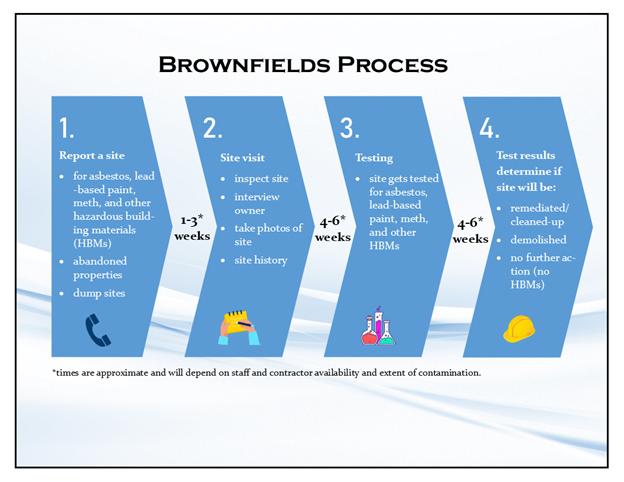
Since 2005, the Southern Ute Brownfields Program has responded to reports of over 70 potentially hazardous sites on Tribal land. Public participation has an important role in locating and identifying potential Brownfields sites. Please contact the Brownfields Program Coordinator to report on a potential Brownfields site, to access the administrative Brownfields record, or to get more information on what can qualify as a Brownfields.
What is a Brownfield?
A Brownfield is a property—either land or a structure—whose reuse may be complicated by the presence or potential presence of hazardous substances, pollutants, or contaminants that negatively affect human or environmental health.
What are examples of site hazards or contaminants?
Chemical Contaminants
- Petroleum hydrocarbons (oil and gas infrastructure, gas stations, auto repair shops)
- Heavy metals (such as lead, arsenic, mercury, cadmium)
- Polychlorinated biphenyls (PCBs) (rubber products, sealants, and electrical equipment)
- Volatile organic compounds (VOCs) (from industrial solvents and degreasers)
- Pesticides and herbicides (from agricultural or landscaping operations)
Physical Hazards
- Asbestos-containing materials (ACM) (common in older buildings)
- Lead-based paint (LBP) (common in older buildings)
- Underground storage tanks (USTs) that may leak hazardous substances
- Drums or containers with unknown contents
Why is this program important?
The Southern Ute Brownfields Program is important because it helps protect human and environmental health, identifies and assess contamination, aids in cleanup or reuse of abandoned/underutilized properties, and involves the community in redevelopment decisions.
How do I participate in the Brownfields Program?
- Help identify potential brownfield sites on Tribal Lands.
- Attend public meetings to discuss site concerns and redevelopment goals.
- Educate and advocate for the community to create awareness of the program and its benefits and share knowledge of potential sites.
How can I report a potential site?
Please call the Remediation Program Manager Lucas Kline 970-563-2256 or Remediation Scientist William Farmer 970-563-2217.
How are Brownfields and Superfund sites different?
Brownfields and Superfund sites are both types of contaminated properties, but they differ in terms of severity, regulatory oversight, and cleanup approach. Brownfields are typically considered to have a low to moderate contamination level, managed under the EPA Brownfields Program, and are focused on redevelopment for future use. Superfund sites are typically highly contaminated, are managed by the EPA Superfund Program, and often have extensive and complicated remediation and cleanup actions.
I want to purchase commercial property. What should I do to protect myself from environmental liability?
Reach out to our Remediation Program and we can see if an Environmental Site Assessments is needed according to the Brownfields All Appropriate Inquiries.
Brownfields Program Core Elements
- Timely survey and inventory of brownfield sites.
- Oversight and enforcement authorities, or other mechanisms and resources, that are adequate to ensure that a response action will protect human health and the environment and is completed.
- Opportunities for meaningful public participation.
- Mechanisms for approval of a cleanup plan and verification that a response is complete.
2020-2025 Brownfields Sites
Old Casino
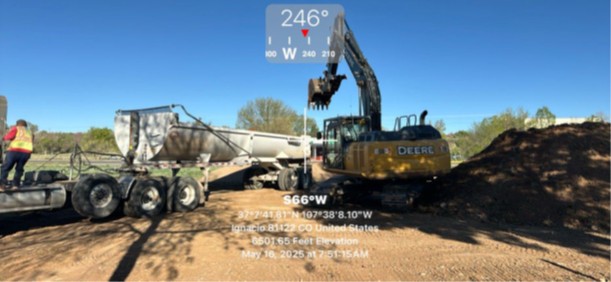
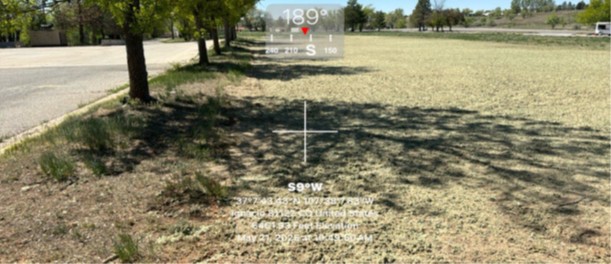
The former Sky Ute Casino Complex consisted of a museum, theater, and multi-purpose space. In the 1970s, a restaurant and lodging addition were built. Subsequently, this addition was renovated in the 1980s and again in the 1990s. In 1993, the casino addition was built. The building was vacated in the fall of 2008 and demolished in 2011.
Asbestos Containing Materials (ACM) including floor tiles, mastic, and window caulking were identified. ACM were removed from the property in August 2011. The building was demolished upon the completion of the asbestos abatement work.
The Old Casino Site had been vacant for several years following the demolition of the site in 2011. A Phase II ESA determined the presence of ACM and polycyclic aromatic hydrocarbons (PAHs) in the surface soil post demolition. The Tribe directed the removal of all ACM and PAHs from the site to render the area safe until a decision is made for redevelopment. In 2024, the Remediation Program hired a contractor to perform soil abatement of ACM and PAHs.
The upper 6 inches of soil were removed and excavated. Following sample collection and confirmation of contaminants below EPA recommended levels, the entire area was backfilled and graded. A second area was remediated where a generator was installed. Both the generator and a concrete slab that the generator sat on were removed. Following removal of both, the area beneath the generator and surrounding soils were excavated. After confirming the removal of contaminants with three grab samples, the area was backfilled.
Post soil removal and restoration of the area, the site samples have shown that asbestos concentrations and residual petroleum compounds have been effectively removed, with no residual impacts to human health or the environment. There are no documented conditions remaining on site that would prevent the property from being developed under either an industrial/commercial or residential use.
Old KSUT Building
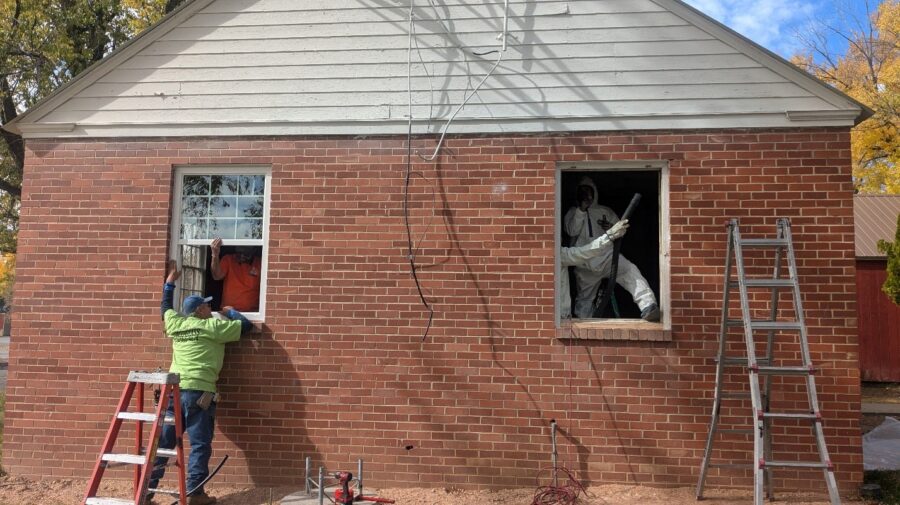
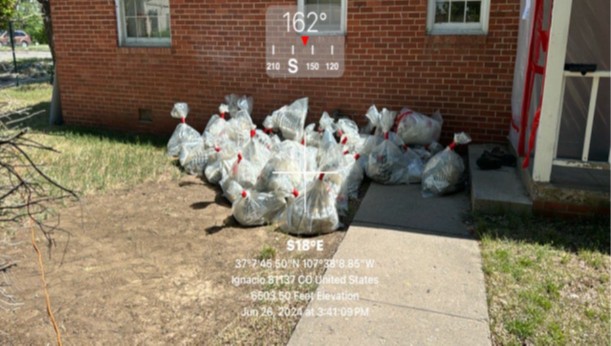
The site is located at 123 Capote Drive, Ignacio, CO and includes a 1,717 square foot, one-story building with a basement that was constructed in the 1930s. The property was originally used as a medical clinic but then was converted for use as the KSUT Radio Station for 30+ years before it was vacated in February 2021.
Friable asbestos was detected in crawlspace soil samples during a Targeted Brownfields Assessment (TBA) in 2020. Other asbestos containing material (ACM) in the building included exterior tar sealant, caulking, roofing felt, beige floor tile, and transite paneling. The building also has lead-based paint (LBP) throughout the exterior and interior, and associated lead-contaminated soil impacting the building’s perimeter. In March 2021, the crawl space was contained and sealed off, and air quality monitoring was performed. Lab results of all indoor air samples are non-detect for asbestos fibers. In July 2023, Tribal Council approved full abatement of the building structure.
A total of 110 bags of asbestos waste and 1.28 cubic yards of LBP waste were generated and properly disposed of at a permitted facility. 15 windows on the former KSUT building were properly abated for LBP and replaced with new vinyl-clad windows.
1,040 pounds (0.52 tons) of soil were removed from the driplines on the western and eastern sides of the building. A contractor installed plastic sheeting, called capping, over residual soils still containing lead levels above the USEPA screening level on the west end gable of the building and covered with clean soil.
The post-abatement air clearance testing revealed the absence of residual asbestos fibers in the air, allowing the building to be safely occupied for future renovation activities. Post remediation soil sample results indicate sufficient removal of lead-based paint to below the USEPA screening level for lead in soil. Currently, the Old KSUT building is fully remediated, and fit for renovation for productive use.
Virbeth No. 1 Well Pad
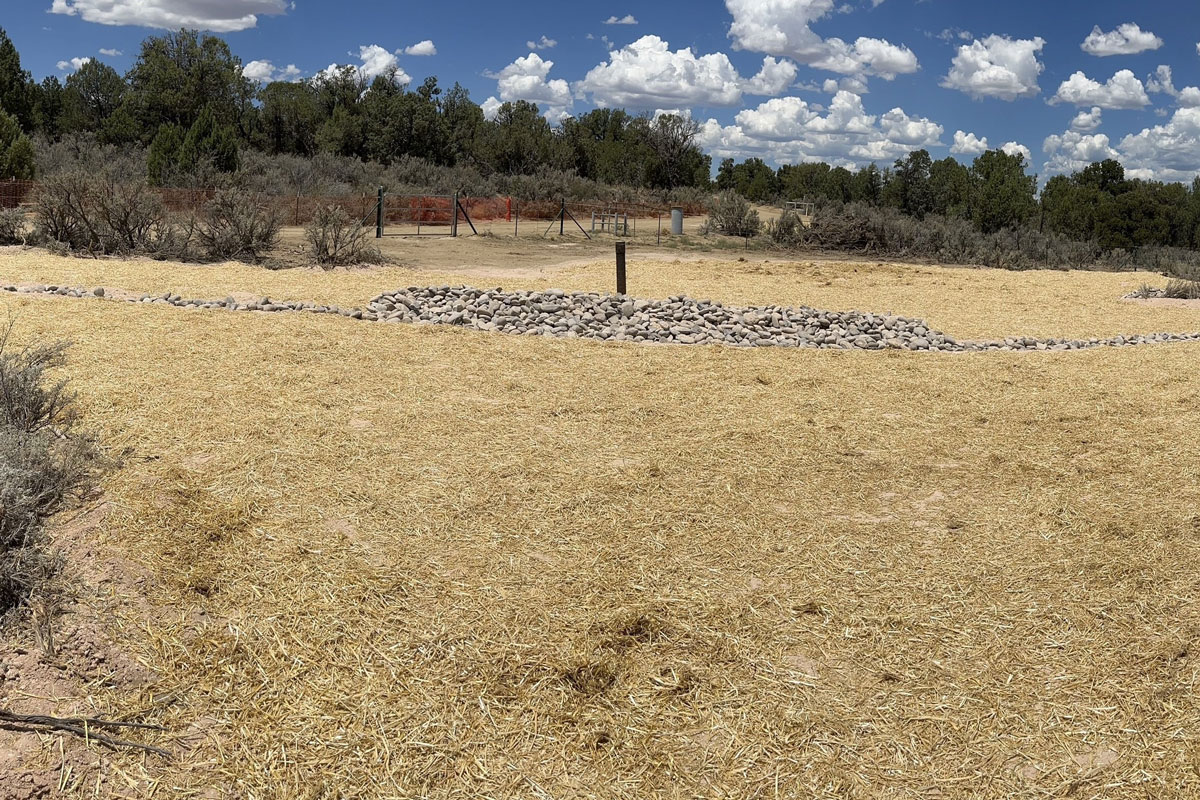
Status: Virbeth No. 1 Well Pad was completed in July 2022
The site was a former abandoned oil and gas well. Clean-up activities included excavation and disposal of petroleum hydrocarbon contaminated soils from the former production pit, soil amendment for the former well pad, and surface stabilization and restoration to facilitate the re-growth of native vegetation.
Services Provided to the Tribal Membership
- Maintains a current Public Record of reported hazardous sites, response actions planned and completed, and site restrictions.
- Assists with Real Estate Transactions to protect buyers from liability for environmental contamination, by performing Environmental Site Assessments according to American Society for Testing and Materials standards and federal regulations.
- Responds to requests for property assessments for environmental conditions, regulated building materials, and other hazards.
- Responds to hazardous materials reports, spills, and emergencies.
- Supports Worker Safety and community health by communicating site hazards with signs and maintaining Institutional and Engineering Controls.
- Assists with Operations and Maintenance Plans to protect workers and building occupants from exposure to health hazards from environmental conditions.
- Provides Education and Outreach on health and safety, avoiding exposure to hazardous materials, and resources for property development.
Project Timeline